Germany is often perceived as an expensive destination, synonymous with high-end automotive engineering, luxury Rhine cruises, and premium urban living. However, for the savvy traveler in 2026, Germany remains one of the most accessible countries in Europe if you know how to navigate its intricate transport systems and local secrets. From the snow-capped Alps in the south to the windswept Baltic coast in the north, seeing the “Land of Poets and Thinkers” does not have to break the bank.
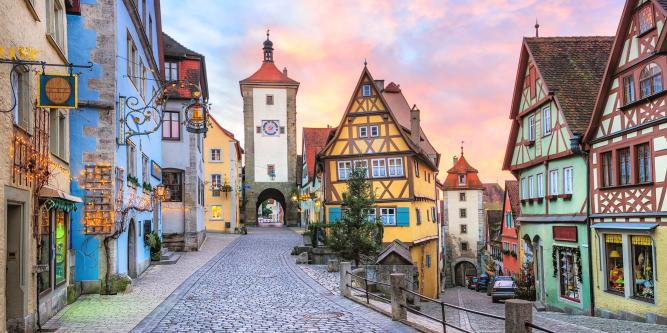
To travel cheaply in Germany, one must look beyond the standard tourist brochures and embrace the logistical tools that locals use every day. Here is a comprehensive guide to mastering the art of budget travel across Germany.
The Deutschland-Ticket: Your Golden Ticket
The single most revolutionary development in German travel in recent years is the Deutschland-Ticket (D-Ticket). For a fixed monthly fee, this ticket allows unlimited travel on all local and regional transport across the entire country.
This includes all city buses, trams, U-Bahns (subway), S-Bahns (suburban trains), and, most importantly, the Regional-Express (RE) and Regionalbahn (RB) trains. While it does not cover high-speed ICE or IC trains, you can technically cross the entire country from Munich to Hamburg using only regional connections.
The practicality of the D-Ticket lies in its simplicity. You no longer need to worry about complex zone systems or buying individual tickets for every city you visit. For a budget traveler staying in Germany for more than a few days, the cost of the ticket often pays for itself within the first 48 hours.
Mastering the Rails: Savings Beyond the D-Ticket
If you need to cover long distances quickly, the high-speed ICE (Intercity-Express) is the way to go, but these tickets can be pricey if bought at the station. To keep costs low, you must utilize the “Sparpreis” (Saver Fare) system.
- Super Sparpreis: These are the cheapest tickets available, often starting as low as 18 Euros for long-distance journeys. The catch is that they are “train-bound,” meaning you must take the specific train listed on your ticket.
- Book Early: Deutsche Bahn typically opens bookings 180 days in advance. Prices function like airline tickets; the earlier you book, the more you save.
- The Probe BahnCard 25: If you plan on taking several long-distance trips, consider purchasing a “Probe” (Trial) BahnCard 25. It lasts for three months and gives you a 25% discount on all saver fares, effectively paying for itself in a single trip from Berlin to Frankfurt.
The Budget King of the Road: FlixBus and BlaBlaCar
While Germany’s rail network is world-class, the cheapest way to travel between major cities is often by bus. FlixBus, a German-born company, dominates the market and offers incredibly low fares, sometimes for as little as 5 to 10 Euros between major hubs.
FlixBus is particularly practical for night travel. Taking a late-night bus from Berlin to Munich not only saves you the cost of a train ticket but also saves you the cost of one night’s accommodation. The buses are modern, usually equipped with Wi-Fi, power outlets, and a restroom.
For a more social and often faster experience, consider BlaBlaCar. This ride-sharing app is extremely popular in Germany. You simply find a driver who is already heading to your destination and pay a small fee to occupy a spare seat. It is often cheaper than the train and allows you to meet locals who can give you “insider” tips on your destination.
Urban Mobility: Pedals and Public Transport
Once you arrive in a German city, the costs can add up. However, German cities are designed for efficiency.
Bike Sharing and Cycling
Germany is a cycling nation. Most cities have their own bike-sharing schemes (like Nextbike or Call a Bike). Renting a bike for a day is usually significantly cheaper than a day pass for public transport, and it allows you to see the city from a different perspective. In cities like Münster or Berlin, the cycling infrastructure is so advanced that it is often the fastest way to get around.
Avoid Taxis
Taxis in Germany are highly regulated and very expensive. Instead, rely on the extensive night-bus and S-Bahn networks that run late into the night, especially on weekends. If you must use a ride-hailing service, look for local “Moia” or “BerlKönig” shuttles, which are shared electric vans that offer a middle ground between a bus and a private taxi.
Eating and Sleeping on a Budget
Travel isn’t just about the movement; it’s about the stay. To keep your daily budget under control, follow these local habits:
- The Mittagstisch: Many German restaurants offer a “Mittagstisch” (lunch menu) from 12:00 to 14:30. These are set meals for workers that are significantly cheaper than the evening a la carte menu.
- Supermarket Dining: Retailers like REWE or Edeka often have high-quality salad bars and bakeries. A fresh “Brezel” (pretzel) or a “Laugenstange” from a bakery is a delicious, quintessentially German snack for under 2 Euros.
- Youth Hostels (DJH): Germany invented the youth hostel. The Deutsches Jugendherbergswerk (DJH) network is massive and includes everything from modern city buildings to actual medieval castles.
Conclusion
Traveling through Germany on a budget is not about deprivation; it is about smart choices. By leveraging the Deutschland-Ticket for regional exploration, booking your high-speed rail seats months in advance, and embracing the ride-sharing culture, you can experience the full breadth of German culture without a premium price tag. The most memorable German experiences—watching the sunset over the Elbe in Dresden or hiking through the Black Forest—are, after all, completely free.
Would you like me to create a specific budget-friendly itinerary for a 7-day trip through Germany’s most famous historic cities?